Blockchain is an invention that has revolutionized several sectors. Logistics management is one sector where its effects are especially intriguing. Conventional supply networks frequently experience participant distrust, ineffectiveness, and secrecy. However, blockchain provides an accessible and decentralized answer to these problems. Blockchain computing facilitates end-to-end traceability, improves data security, and streamlines regulation through smart agreements by offering a safe and unchangeable ledger of activities. Examining blockchain’s potential to guarantee visibility into supply chains becomes essential in the Latvian setting since customer trust and prosperity depend on it.
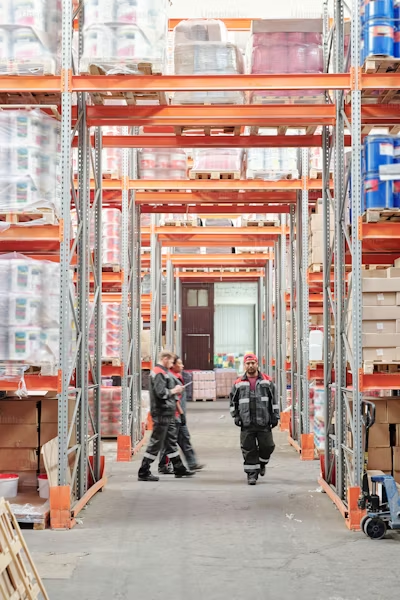
This piece will explore the uses and advantages of blockchain technology in the Latvian logistics sector, as well as possible obstacles and possibilities for its broader implementation.
Understanding the current challenges in supply chain transparency
Since distribution systems are intricate webs with several players and procedures, openness is a major problem. Clarity and little visibility within conventional logistics networks provide room for dishonest business tactics, fake goods, and other illegal behaviors. Serious repercussions from this absence of transparency could include lowered safety regulations, weakened reliability of goods, and harm to one’s brand. Particular difficulties in the Latvian setting could include product tracking, following rules, and establishing participant confidence. Safeguarding customer needs, maintaining supply chain openness, and promoting viable prosperity all depend on identifying and resolving these issues.
Blockchain solutions for supply chain transparency in Latvia
The development of blockchain software presents creative answers regarding supply chain problems. The following fixes can improve Latvia’s supply channel integrity and promote a more reliable and effective ecosystem.
End-to-end traceability
End-to-end tracking can be implemented thanks to blockchain technology, which records each exchange and transfer of products on an irreversible ledger. Responsibility and openness are ensured since every link in the distribution network has access to information on the source and authenticity of items. Latvian suppliers may track the flow of goods, manage the production process, and pinpoint the source of the components by utilizing blockchain technology. This creates a strong system that reduces imitation and boosts consumer trust.
Provenance tracking
Complete provenance monitoring is made possible by blockchain-based technology, giving clients and companies the ability to confirm the legitimacy and caliber of goods. Suppliers can obtain a clear and unchangeable history of all goods by logging pertinent data on the public ledger, including certificates, batch figures, and quality checks. The approach lowers the possibility of criminal activity occurring inside the supply network, encourages ethical sourcing, and gives clients the freedom to make educated choices.
Data immutability and audibility
The capacity of blockchain systems to guarantee the accuracy of data is one of its primary characteristics. A protected and unchangeable record of data and operations is provided by the distributed ledger through the use of secure algorithms and decentralized consensus methods. This feature makes audit trails accessible and impenetrable, which improves supply chain auditability. Blockchain-enabled accountability in Latvia can facilitate regulatory compliance, expedite audit procedures, and offer verifiable proof of moral behavior, all of which contribute to customer confidence.
Smart contracts for compliance automation
The blockchain’s automatic deals, or “smart contracts,” hold great promise for streamlining supply chain adherence. Smart arrangements can proactively regulate adherence to laws, quality guidelines, and commitments by encoding legal provisions into a digital ledger. This technology can improve honesty and effectiveness in Latvia by streamlining supply chain processes, lowering taxes and fees, and lowering the risk of violations.
Collaborative platforms and trust networks
Blockchain software makes it possible to establish trust systems and cooperative networks that unite various supply chain ecosystem participants. These systems enable users to share data in real-time, communicate securely, and come to consensus. Latvian logistics networks can break down information barriers, expedite choice-making, and increase overall transparency by promoting cooperation and trust. Furthermore, blockchain-based trust networks facilitate the administration of images and the confirmation of data, encouraging moral and ethical corporate activities.
Potential barriers and future directions
Although blockchain technology presents attractive prospects for augmenting the visibility of supply chains in Latvia, several obstacles must be tackled before it can be extensively used. First of all, conventional supply chain participants who are averse to altering established procedures and are not acquainted with the distributed ledger may oppose changes. It’s also important to give serious thought to issues with data protection, scalability, and compatibility between various blockchain systems. Campaigns for awareness and learning, industry cooperation, and governmental backing will be essential in overcoming these obstacles.
Future options for blockchain in Latvia’s transparent supply chain include investigating cutting-edge technology like artificial intelligence (AI) analytics, and Internet of Things (IoT) integration. Latvia can realize the full promise of the blockchain system to establish transparent, safe, and efficient distribution networks by removing these obstacles and welcoming innovation.
You may also find these articles helpful
How inflation affects businesses
Guide on selling a business
Food and beverage production market overview in Latvia