Industries all around the world have undergone a digital revolution, and Latvia’s industries are no different. This article examines the enormous impact of digital transformation on the manufacturing landscape of Latvia, its effects on business operations, and the advantages it offers the industry.
Streamlined manufacturing procedures
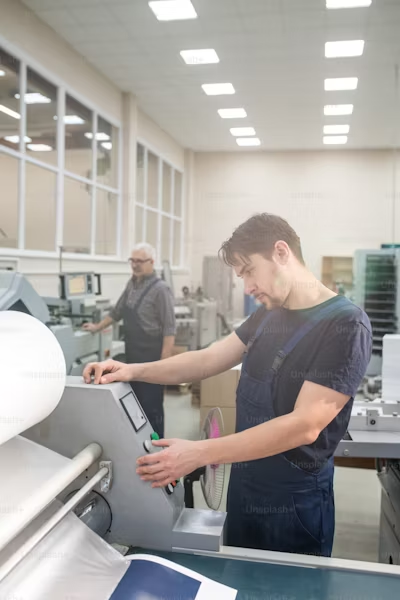
Automation, robotics, and smart manufacturing techniques are used to optimize production processes. This helps Latvian firms operate more effectively, cut down on manual errors, produce more, and shorten their time to market.
Enhanced supply chain management
Real-time visibility and control across the whole supply chain are made possible by online-based transformation. Latvian producers can track inventory, monitor shipments, and streamline logistics with the use of technology like IoT sensors, RFID tracking, and data analytics, assuring prompt delivery and minimizing disruptions.
Advanced maintenance planning
Predictive maintenance solutions can now be implemented by Latvian manufacturers thanks to electronic transformation. They can monitor equipment performance in real-time, identify potential problems, and carry out preventive maintenance by utilizing IoT sensors and data analytics, which minimize downtime and maximizes equipment longevity.
A higher standard of the goods
Latvian firms can improve product quality with the help of online-based technologies like AI-powered quality control systems and data analytics. Defects, deviations, and opportunities for improvement are found through real-time monitoring and analysis, which supports consistent quality standards and customer satisfaction.
Dynamic manufacturing
Latvian enterprises can adopt agile production processes thanks to technological transformation. They can quickly respond to shifting market demands, customize products, and effectively adapt to changing client needs by employing flexible production methods and utilizing real-time data insights.
Deployment of smart factories
In Latvia, the adoption of smart production is made possible through technological transformation. Smart factories leverage IoT, AI, and robotics to create interconnected systems, enabling seamless data sharing, process automation, and intelligent decision-making, resulting in improved operational efficiency and cost savings.
Empowering employees
The workforce in manufacturing is given new tools and capabilities thanks to the technological revolution. Manufacturers in Latvia make investments in employee training programs to improve digital literacy and give their staff the skills needed to run and maintain cutting-edge online fabrication systems.
Data-driven decision making
Latvian manufacturers may use big data and analytics to make wise decisions thanks to digital transformation. They can find patterns, trends, and opportunities by analyzing enormous amounts of production data, which results in data-driven strategies and better commercial outcomes.
Impact on the environment and sustainability
Sustainable business practices in the Latvian manufacturing industry can benefit from online-based transformation. Manufacturers may lessen waste, lessen environmental effects, and meet sustainability targets by using energy-efficient technologies, monitoring resource use, and optimizing fabrication processes.
Innovative collaboration
Within the Latvian industrial sector, digital transformation stimulates collaboration and innovation. Manufacturers can engage in real-time with partners, suppliers, and customers using online platforms and technologies, fostering co-innovation, product creation, and new business models.
Analytics and real-time data monitoring
Latvian manufacturers are now able to get real-time data from sensors and IoT devices installed in machinery and manufacturing lines thanks to digital transformation. To get practical insights, boost operational effectiveness, and enhance production procedures, this data can be evaluated.
Remote supervision and management
Latvian enterprises can remotely monitor and manage equipment and manufacturing processes thanks to electronic transformation. In especially remote or dangerous environments, this feature increases operational flexibility, permits remote troubleshooting, and decreases the need for on-site staff.
Lifecycle management for products
End-to-end product lifecycle management is made easier by technological change. Manufacturers can use digital tools and platforms to streamline and optimize each stage of the product lifecycle, from design and prototyping to production, distribution, and after-sales service.
Protection of intellectual property and data security
To protect critical production data and intellectual property, digital transformation requires strong cybersecurity safeguards. For the protection of their electronic assets and to uphold the confidence of their clients and business partners, Latvian manufacturers must invest in cybersecurity solutions.
AI and machine learning integration
Latvian firms utilize AI and machine learning to analyze vast data sets, optimize production planning, forecast demand fluctuations, and automate quality control, resulting in enhanced efficiency and cost savings.
You can also find these articles helpful
Global Business Services market overview in Latvia
Required licenses for wholesale and retail trade business in Latvia
Required licenses for Information and Communication business in Latvia